Leaving A Mark May 2, 2008
Posted by Chuck Musciano in Random Musings.Tags: History, Lincoln
add a comment
Frequent readers know I am working my way through Team Of Rivals, a great account of Abraham Lincoln’s political career. As I read it, I am struck by the detailed information available to us 150 years after these events unfolded. For the most part, the book is drawn from newspaper accounts of the era and personal letters from the various people involved. Even today, these archives are well-preserved and readily accessible to any interested parties.
 , a great account of Abraham Lincoln’s political career. As I read it, I am struck by the detailed information available to us 150 years after these events unfolded. For the most part, the book is drawn from newspaper accounts of the era and personal letters from the various people involved. Even today, these archives are well-preserved and readily accessible to any interested parties.
I think it will be impossible write such a book about our current world 150 years from now. While we are recording more data in more ways than ever before, we are recording it in ways that are transient and unstable. I haven’t written a real letter, on real paper, in 25 years. I haven’t saved a letter I have received in the past 25 years. No one will ever rummage through my attic, long after I am gone, and turn up a trove of letters, bound with ribbon and unlocking the secrets of my time.
What you might find would be utterly useless, even today. I have a reel of 9-track tape that holds all the code I wrote at my first job, between 1982 and 1985. I have floppy disks with old files, both 5.25″ and 3.5″, that are completely inaccessible to me now. On my laptop are copies of my address book from a previous job, cleverly stored in the Novell Address Book format. Lots of data, stories to be told, lost to the ages. Over my career, I’ve posted thousands of articles to dozens of Usenet newsgroups, and posted a weekly movie ratings report to rec.arts.movies for five years. Perhaps two dozen of these posts still survive in remote corners of the Usenet archives on the web. I ran a web site for six years, and wrote weekly columns for three other sites for almost ten years. Again, all gone, deleted without a second thought when those sites were shuttered. Even these blog entries will be gone without a trace in twenty years.
My father has half-a-dozen original photos of my ancestors in Italy, taken between 1880 and 1905. They have survived over 100 years, passed from generation to generation as precious heirlooms, given the appropriate care that such a rare artifact deserves. In my children’s hands, they will survive another 70 years before being turned over to the next generation with a similar admonishment to take care of them. I also have over 5,000 photos taken over the past ten years, stored as JPEG images on my laptop and carefully archived using Adobe Photo Album. Does anyone really believe that these photos will be accorded the same care? Will someone copy them from media to media every few years, converting them to some new format as needed? When my son takes out the photo of his great-great-great-grandmother in 50 years, will he be able to look at those photos from our church retreat last weekend just as easily? I doubt it.
I worry that we are not leaving a mark, a tangible reminder of our thoughts and dreams and lives. Lincoln’s letters (and those of his contemporaries) are filled with deep thoughts, emotions, and dreams. They are transcribed conversations that reflect what people were doing across a period of years. What are we leaving behind? Facebook pages? YouTube videos? A thousand unrelated tweets on Twitter? Lots of data, very little content, all in a format that is exceedingly perishable. In the end, the most connected generation may leave behind the smallest useful footprint of our daily lives.
I don’t have a solution to this. Should we all start writing letters? It makes my hand hurt just to think about it. Convert everything to paper hard copy? I don’t have the space to store it all, and I wonder how long the ink would last before fading away.
I think it is important to leave a mark, large or small, one way or another. Perhaps the mark we leave, like that of Lincoln, transcends the paper and photos and is truly captured by the lives we touch and affect for all the years to come. In that regard, we should all live our lives in the hope that we could touch even a fraction of those impacted by Lincoln and that 100 years from now, someone would still know our name.
Pedantic Punctuation, Part 2: Emphasis Quotes March 19, 2008
Posted by Chuck Musciano in Random Musings.Tags: Grammar, Punctuation
add a comment
Another in my ongoing series on punctuation errors that drive me crazy…
There are a few simple rules to using quote marks correctly. These are easy to remember, so let’s get them out of the way quickly:
- Quotes are used to indicate words that are directly quoted from another source.
- They are also used to indicate an alternative or non-standard usage of an otherwise well-understood word or phrase.
That’s it. You may not use them emphasize words or phrases. You may not use them draw attention to the important part of a sentence.
Here’s a topical example that makes this clear:
Elliot Spitzer was seen at the hotel with his “wife.”
Hmmm. In this case, efforts to emphasize that Mr. Spitzer was seen with his wife seem to have gone astray. I am also fond of statements like this in restaurants:
Try Our “Beef” Special
Thanks, but I’ll pass. Mentally, I am saying the word “beef” while making “finger quotes” in the air, which leads me to believe that the special may be many things, but it certainly isn’t beef.
If you are directly quoting a source, verbatim, make sure you use the quotes. If you are making finger quotes to the reader while saying something, get those quotes in there. But if all you want to do is draw attention to what you are saying, there are other proven conventions that still work. Really!
Pedantic Punctuation, Part 1: The Serial Comma March 14, 2008
Posted by Chuck Musciano in Random Musings.Tags: Grammar, Punctuation, Spelling
add a comment
I am a stickler for correct spelling and punctuation.1 There is no greater indication of the decline of modern civilization than the lax attitude taken towards these foundations of correct communication. Recently, my son took the North Carolina State Writing Test for seventh graders. Among the various metrics used to grade the test was “Conventions.” Conventions are spelling and grammar; they comprise 10% of the score. The only way to not get full credit for Conventions is to commit some error so egregious that it renders your essay completely unintelligible. As long as the student “comes close” to correct spelling and grammar, modern educators are satisfied.
Ahem. Spelling, grammar, and punctuation are not “conventions.” They are rules, well defined, easily taught, and easily applied. They indicate that the author actually cares about his work and respects the intelligence and time of his audience. While incorrect essays in school may be overlooked by teachers, incorrect communication in the real world is viewed at best as sloppy and at worst, illiterate.
To that end, and to inaugurate a new series of occasional posts, let us address the serial comma.
The serial comma is the comma that should always be placed after the next-to-last element of a sequence, just before the “and” or “or” that joins the last element to the sequence. This is not an optional comma, to be deleted by the sloppy or careless writer as is their wont. It is a required element that always makes the sequence clear and unambiguous.2
Consider the sequence
My favorite foods are steak, shrimp, macaroni and cheese and crackers.
Confusing? Of course! We’ll never settle on a dinner menu. But the serial comma removes all doubt:
My favorite foods are steak, shrimp, macaroni and cheese, and crackers.
or
My favorite foods are steak, shrimp, macaroni, and cheese and crackers.
There are some who will insist that most sentences do not suffer from this kind of potential problem and are thus exempt from the serial comma rule, as if commas are in short supply and must be hoarded for such crucial uses. In fact, punctuation should be consistently applied throughout a document so that all lists use serial commas all the time.
Next time on Pedantic Punctuation: inappropriate use of quotation marks for “emphasis!”
1 As a result, this post is almost guaranteed to have some spelling, punctuation, or grammar error.
2 Contrarians can create sentences that are ambiguous with or without the serial comma, but these are fundamentally unsound sentences that should be rewritten anyway.
Spring Forward! March 8, 2008
Posted by Chuck Musciano in Random Musings.Tags: Consequences, Time Zones
add a comment
Ah, you can tell the seasons are changing. Temperatures are rising, trees are budding, and most important of all, we have to set all our clocks forward one hour. It is time for the biannual time shift known as Daylight Savings Time.
 From an IT perspective, DST is just an irritant. So many systems, so many clocks, so many potential job streams to be broken. In the spring, jobs scheduled between 2 and 3 AM don’t run; in the fall, they all run twice. Somewhere, some system will not change, and everything will be off by an hour until some attentive user calls the support desk. Last year, the great DST Change that mandated that we start earlier and end later just about killed every Exchange mail administrator in the United States. Even now, the echoes of that debacle show up in weird time-shifted appointments that linger from late last March.
Indiana has always been held in special regard in the IT world, due to their truculent insistence on not converting to DST like the rest of us. How many hours of development and testing has been dedicated to accommodating 77 counties in Indiana? We’ll never know.
Fortunately, these counties have allowed us to learn something I suspected all along: DST wastes energy. Long advertised as an energy-saving initiative, DST actually causes people to use more energy than Standard Time.
In 2006, these rogue counties in Indiana finally threw in the towel and converted to DST with the rest of us. This provided a golden opportunity to study their energy usage and compare it to previous, non-DST usage patterns. The final result: DST uses 4% more energy that standard time. As reported by the Wall Street Journal, here’s why:
- People run their air conditioning more in the evening when it is warmer
- People run their heat in the morning, when they get up in the cooler early hours
- Heating and cooling costs more than offset the saved lighting costs in the evening
This last bullet is my favorite. It surprises a lot of researchers that it costs more to heat and cool a house than it does to illuminate it. (This does not surprise those of us who pay the bills).
In the end, affected Indiana families paid $8.6 million more in energy costs due to the change. Their US Representative, Julia Carson, had promised $7 million in savings. That’s a net loss of $15.6 million, not including the conversion costs for businesses who had to reprogram every device they ever owned since the dawn of computing.
In the end, this serves to reinforce two important lessons:
- The Law of Unintended Consequences never fails to be applied
- The government never improves anything it touches
Still, there is a light at the end of this tunnel. If nothing else, that extra hour of daylight we get from DST should allow us to grow more corn, producing more ethanol to eliminate our dependence on foreign oil!
Goodbye, Roy February 11, 2008
Posted by Chuck Musciano in Random Musings.Tags: Acting, Movies, Roy Schieder
add a comment
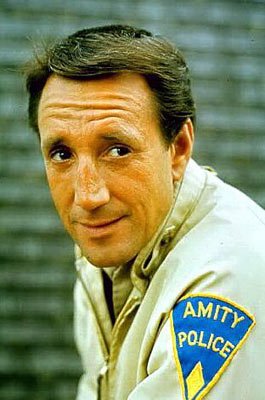 Roy Scheider passed away this weekend at the age of 75, after battling cancer for two years. He is famous, of course, for playing Police Chief Martin Brody in Jaws, as well as starring in dozens of other films. And, although it seems to have been overlooked in his various obituaries, he also starred in a movie with me.
In parallel with my lengthy IT career, I also moonlighted as a movie extra back in the ’80s. For the princely sum of $40 a day (less $4 to my agent) my acting services were available to any and all production companies choosing to film in the Orlando area. Over a period of several years, I performed in Disney travel videos, commercials, and training and marketing films known as “industrials.” I got to meet Michael Eisner, and I even danced in close proximity to Downtown Julie Brown, which qualifies as my only foray into the horror genre.
My career peaked with my performance with Roy in Somebody Has To Shoot The Picture. In this film, a wrongly convicted man awaits his fate on death row while Roy attempts to exonerate him before it is too late. Not to spoil it or anything, but Roy just a bit too late and the man is executed, a dramatic indictment of our inherently unfair criminal justice system.
I appear in the very, very, very last scene of the movie. As Roy walks out of the prison, head down and dejected, I can be seen with some other woman and two nuns, kneeling in prayer beside the walkway. Roy walks right next to me as the credits start to roll.
We shot this scene at night, and it took all night to get it right. We spent a lot of time hanging out at the caterer’s cart, feasting on the excellent free food. As the shoot dragged on, the writer of the movie, an authentic Left Coast Liberal, polled the crowd of extras to see if we agreed with his political views. When he asked how many people on the set opposed the death penalty, not a single hand went up. This was at a time when Florida was trying to execute Ted Bundy for his serial killing spree, and also trying to legislate a mandatory seat belt law. T-shirts emblazoned with “I’ll buckle up when Bundy does” were popular. The poor writer had no idea of the kind of crowd he was up against. For $40, of course, we could set aside our political differences and act like we opposed the death penalty. Remember, there are no small parts, only small actors.
In hindsight, I realize now that shooting movies is a lot like most any IT project. It takes a lot longer than you originally estimated. It takes a lot more people and equipment that you originally thought. You’ll be up all night at some point. You have to do some parts over and over. And the most important aspect of the project is the quality of the free food they provide.


 The Effective CIO